
The Person Behind the Performance

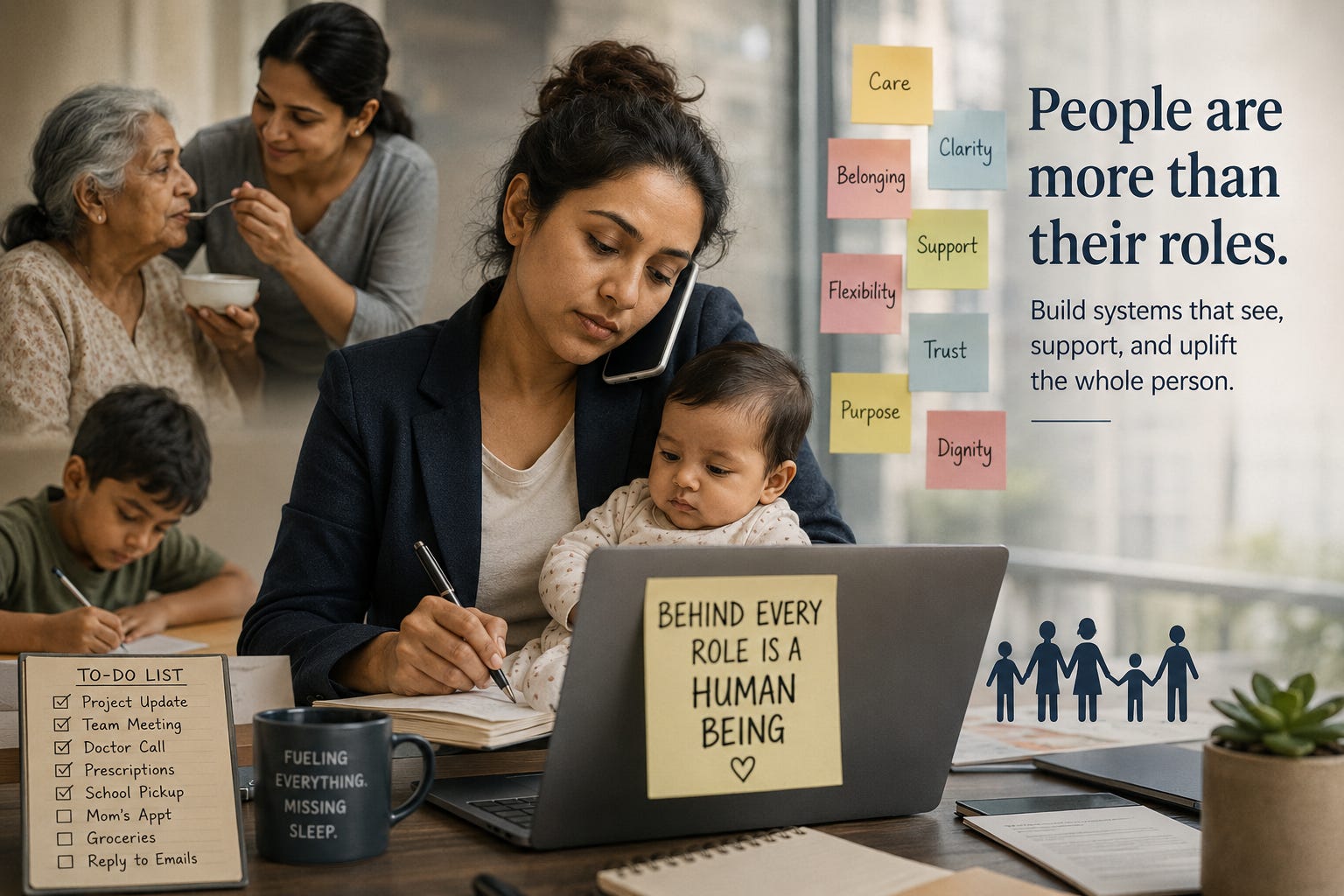
One in four American adults is a caregiver.
That means millions of people are not only employees, job seekers, managers, recruiters, or workers. They are also caring for aging parents, spouses, children, siblings, neighbors, or loved ones living with illness, disability, or complex needs. Yet in employment, we often speak about people as if they stop being seen as a person and become a result. They become a performance review, a job title, a cost, a risk, a mistake, or a hire that did not work out. In recruiting and management conversations, this can happen quickly. Someone interviews well, gets the job, starts the role, and within a few weeks the story becomes, “They could not perform.” Sometimes the conclusion is even sharper: “It was a bad hire.”
Maybe the person truly could not do the job. Maybe the role required a level of skill, judgment, speed, communication, ownership, or resilience that they did not have. Maybe the hiring process missed something. Maybe the person misrepresented their ability. Maybe the company had to make a difficult decision and move on. There are real consequences when work is not done, when teams are strained, when care is not delivered, when deadlines are missed, or when someone’s inability to perform creates risk for others.
But even when the conclusion is accurate, the label can still be incomplete.
“Bad hire” describes an outcome, but it rarely explains what happened. It tells us that the person did not meet the demands of the role, but it does not ask why. It does not ask what the interview measured. It does not ask what the job actually required. It does not ask whether the person lacked skill, care, capacity, support, clarity, fit, or the ability to learn fast enough in that environment. Most importantly, it does not ask who the person was beyond the moment they failed to perform.
This matters because work does not happen in isolation. Behind every employee is a whole human life. Behind every applicant is someone carrying roles that never appears on a resume such as of a father, mother, husband, wife, son, daughter, caregiver, patient, provider, advocate, or someone silently holding together a family situation no one at work can see. They hold multiple roles at once. At any given time, they are managing projects, answering emails, taking calls from doctors, arranging transportation, filling prescriptions, missing sleep, helping with bathing, and worrying about parents, children, spouses, siblings, or neighbors, while still trying to show up as “professional.”
This is where caregiving and employment begin to mirror each other. In both spaces, people are easily reduced to roles. At work, a person becomes a worker, a performer, a manager, a high potential employee, a low performer, a bad hire, or a poor fit. In care, a person becomes a caregiver, a patient, a client, a dependent, a burden, a case, or a responsibility. The language may be practical, but over time it makes us forget that every role is being carried by a human being with a body, a history, a family, a mind, a nervous system, a set of limits, a desire to matter, and a need to belong.
We say people cannot perform, but we often do not ask what performance is made of. Performance is not only skill. It is also energy, attention, judgment, confidence, emotional regulation, communication, memory, context, desire, support, and meaning. One person succeeds because they have the technical skill and the environment matches how they work. Another person with a similar background fails because the role requires ambiguity when they need structure, speed when they need depth, independence when they need coaching, or emotional steadiness when their life outside work is already consuming their capacity. One person thrives because they feel connected to the purpose of the work. Another collapses because they are doing tasks without meaning, without belonging, and without any real sense that their effort matters.
This does not remove accountability. It makes accountability more honest. Work still has to be done. Care still has to be delivered. Teams still need trust. Employers still need outcomes. Families still need support. Standards matter. But the way we talk about failure matters too. There is a difference between saying, “This role is not working,” and saying, “This person is bad.” There is a difference between saying, “This person does not have the skills for this job right now,” and saying, “This person has no value.” There is a difference between naming a performance gap and turning the whole person into the gap.
The danger of labels is that they are efficient. They help systems move fast. “Bad hire” closes the file. “Low performer” explains the problem. “Not a fit” makes the decision sound clean. “Caregiver burden” turns a family reality into a category. “Dependent” turns a person receiving care into a need to be managed. These labels sometimes point to something real, but they also protect us from asking deeper questions. They allow us to move on without examining what we missed, what we failed to support, and what kind of systems we are building.
That question becomes even more urgent in a labor market shaped by layoffs, restructuring, automation, and fear. When employers announce tens of thousands of job cuts, people do not only lose income. They may lose structure, identity, community, health insurance, purpose, and the feeling that they are still needed. A layoff may be described in financial language, but it lands in human lives. It lands on parents, spouses, adult children caring for aging parents, people paying medical bills, people trying to keep homes, people trying to remain useful in a world that often measures usefulness through employment.
When we treat work only as an exchange of labor for money, we miss what work does to the human spirit. Work can provide dignity, rhythm, contribution, learning, connection, and identity. But when work becomes only extraction, people become replaceable units of output. And when someone can no longer produce at the expected level, the system often asks how quickly they can be replaced instead of asking what is behind the breakdown.
Caregiving exposes this contradiction. Care is some of the most necessary work in society, yet much of it is unpaid, unseen, under-supported, and emotionally consuming. A person may spend hours caring for someone they love and then enter a workplace that only sees whether they answered an email quickly enough. A caregiver may be developing patience, crisis management, advocacy, scheduling, emotional intelligence, medical navigation, and endurance, yet none of that counts as “performance” in the formal economy. At the same time, a person receiving care is been treated as someone who only needs help, even though they are still a whole person with identity, memory, dignity, preferences, relationships, and something to offer.

This is why asking a deeper question matters more than asking only whether someone can perform. The question is not simply, “Can this person do the job?” The deeper question is, “What makes performance possible?” Is it skill, care, judgment, stamina, training, belonging, clarity, or purpose? Is it the fit between the person and the work? Is it whether the person feels seen enough to bring their full self into the role? And if someone cannot perform in one environment, does that mean they are incapable, or does it mean we have not yet understood the conditions under which they can contribute?
We are multi-faceted individuals, but many of our systems are built to see only one side of us at a time. Employment sees output. Healthcare sees need. Care systems see tasks. Recruiting sees credentials. Management sees performance. Families see roles. But the person is always more than the category. The employee may also be a caregiver. The caregiver may also be exhausted and grieving. The person receiving care may also be wise, funny, proud, afraid, and still longing to participate. The person who failed in one job may still have gifts that were never measured. The person who was laid off may still have purpose even when their position disappears.
Maybe this is what we have forgotten: people are not tasks to complete. People are not labels to manage. People are not only valuable when they are useful. A person’s worth does not begin when they perform and disappear when they struggle. If we continue to build workplaces and care systems around that false belief, we will keep creating environments where people hide their limits, fear their humanity, and feel disposable the moment they cannot keep up.
A better future requires better questions. Before we call someone a bad hire, we can ask what the hiring process actually measured. Before we call someone a low performer, we can ask what conditions are blocking performance. Before we call someone a burden, we can ask what support would protect dignity for both the caregiver and the person receiving care.
The purpose of work should not only be production and also contribution, learning, dignity, and shared value. The purpose of care should not only be task completion and also being present, protected, and filled with human connection. When work and care lose their humanity, they become systems of management. But when they remember the whole person, they can become places where people are not only measured, but understood; not only corrected, but supported; not only used, but valued.
We can hold people accountable without stripping them of dignity. We can admit when a role is not working without turning a person into a failure. We can make hard decisions without pretending the person affected is only a cost or a mistake. And we can build systems that ask not only what people produce, but what helps them learn, contribute, care, and belong.
Who are we when our roles, tasks, and performance are stripped away?
We are still human beings.
We are people with capacity and limitation, strength and need, responsibility and vulnerability. We are people who can fail and have worth. We are people who can need support and are able to give.
Maybe the real question is not how well we measure performance, but our systems are rooted in love, care, and the belief that people are meant to prosper together. Work and care should not reduce people to usefulness. They should help us build lives where dignity, belonging, and shared growth are possible. Otherwise, we only see people when they are useful and we then forget the person behind the role.
We forget that the employee is also a parent, a caregiver, a spouse, a son, a daughter, a neighbor, a friend, and a human being carrying responsibilities we may never see.
We forget that the person receiving care is not only a patient, a client, or a list of needs, but someone with memory, identity, dignity, preferences, relationships, and a desire to still matter.
We forget that the person who struggles at work may not be lacking worth. They may be lacking support, clarity, belonging, fit, rest, or the conditions needed to contribute.
And when systems forget the person behind the role, people can begin to forget themselves too.
They begin to ask: Who am I if I cannot perform? Who am I if I need help? Who am I if I am no longer useful in the way the world expects?
That is why the purpose of work and care cannot be only output, efficiency, or task completion. Their purpose must also be to protect humanity. To create conditions where people can learn, contribute, receive support, and remain whole.
Systems do not ask, “What can this person produce?”
They ask, “What helps this person belong, grow, care, and prosper with others?”
Because the future we need is not one where people are measured only by their performance. It is one where performance, care, dignity, and humanity can exist together.
If we remembered the person behind the role, how would we redesign work, care, and accountability?